

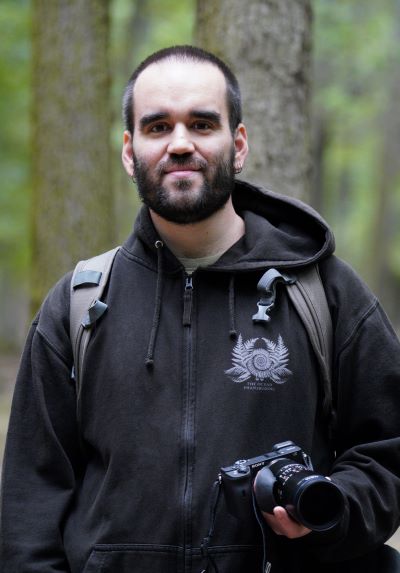
- PostDoctoral Studies
- Kiel, Germany
A few words About Me
I received my Bachelor’s degree from the Department of Biology and my Master’s degree from the Department of Geology at the National and Kapodistrian University of Athens. I then moved to France, where I completed my PhD at the Institut Pasteur and the University Paris 7 Diderot. From 2019, I worked as a postdoctoral researcher (Alexander von Humboldt Fellow) at the University of Duisburg-Essen in Germany. I am now a junior research group leader at the Institute of General Microbiology at Kiel University.
My research focuses on the role of microorganisms in the carbon cycle and other elemental cycles, as well as their interactions with geological processes from the origin of life to the present day. I combine phylogenetic methods (molecular evolutionary biology), metagenomics, and computational biophysics to investigate the evolutionary relationships of Bacteria and Archaea, the evolution and ecology of their metabolism, and their communities in environments that resemble early Earth and exoplanets, such as the subsurface and geothermal systems. In my free time, I enjoy photography (wildlife, micro-, macro-, and astrophotography) and composing music.
Why I Chose My Career
Although I loved the natural sciences from a young age—especially paleontology and astronomy—I made many wrong choices along the way. It took meeting the right professors and colleagues, as well as a series of unfortunate events, to clarify what kind of career I truly wanted and to find the courage to pursue it.
Why I Became a Volunteer at R.E.A.L Science
From a career-guidance perspective, I want to share my experiences with students so they can have as much information as possible before choosing their professional path, especially if it involves research or academia. I want them to know that it is never too late to change direction and that science is not confined to the restrictive boxes of a single academic discipline.
From a scientific perspective, my goal is to show them how an interdisciplinary approach can provide answers to major challenges facing humanity, such as climate change. Since their appearance 4 billion years ago, living organisms have survived enormous geological and planetary catastrophes, and evolution has produced a biodiversity that we may partially erase through our actions before we even understand it.