

- Doctoral Studies
- Thessaloniki, Greece
About Me
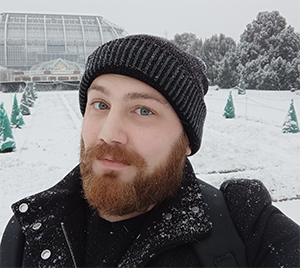
I am a PhD candidate in the Department of Biology at Aristotle University of Thessaloniki, specializing in Botany. My dissertation focuses on “The Taxonomy of the Genus Acinos Mill. (Lamiaceae) in Greece.”
My broader interests include Environmental Biology, Biodiversity, Plant Taxonomy — with an emphasis on Greek flora — and Aromatic Plants. Recently, I have visited Botanical Museums in Greece and abroad for research purposes, working on organizing, digitizing, and utilizing their collections.
In my free time, I enjoy spending time with friends or drawing. I often try to relax by hiking in nature, but the plants I encounter — combined with the “occupational hazard” of being a botanist — tend to turn peaceful walks into field‑sampling expeditions!
Why I Chose My Career
Everything began with the innate curiosity I had as a child for what I later learned is called “biodiversity” — the astonishing variety of life at every level. During my Undergraduate Studies in Biology at A.U.Th., plants, and especially the rich Greek flora, captured my interest and earned my full dedication.
Long before finishing my degree, I realized that instead of decreasing, my questions were multiplying exponentially. Continuing the search for answers became the only path forward. I pursued a Master’s degree in “Biodiversity Conservation and Sustainable Use of Native Plants” and dove into the deep end.
What I didn’t know at first — but soon understood — was that the seed of curiosity planted in early childhood, when I used to pluck apart my grandmother’s garden, had firmly taken root and would eventually lead me to a PhD. Thankfully, academic degrees don’t go any higher, because I would probably keep going!
What I do know for certain is that I will continue researching, gathering questions, and seeking answers — now as part of my profession.
Why I Became a Volunteer at R.E.A.L Science
Today, biodiversity loss and species extinction are among the most critical environmental challenges we face. Only through educating future scientists and citizens can we maintain hope — and it is everyone’s responsibility to help. Unfortunately, this education is often lacking, with only a few bright exceptions.
It is also our duty to provide younger generations with the information and guidance that we ourselves missed. For these reasons, and without a second thought, I try to contribute whenever and however I can.